
When Protest Enters the Sanctuary Part 2
Preparing Houses of Worship for Coordinated Disruptions Without Losing Peace, Witness, or Control
Introduction to Part Two
In Part One, we examined how coordinated protest tactics are evolving and why sanctuaries may be targeted for disruption. We explored warning signs, exterior considerations, and the importance of clear authority before a crisis unfolds. Part Two now turns to operational response: what to do when protesters enter, how to protect children and congregants, how to involve law enforcement appropriately, and how to document events without amplifying disruption. The focus shifts from awareness to disciplined execution; ensuring that strength is demonstrated through calm, lawful control.
If Protesters Enter the Sanctuary
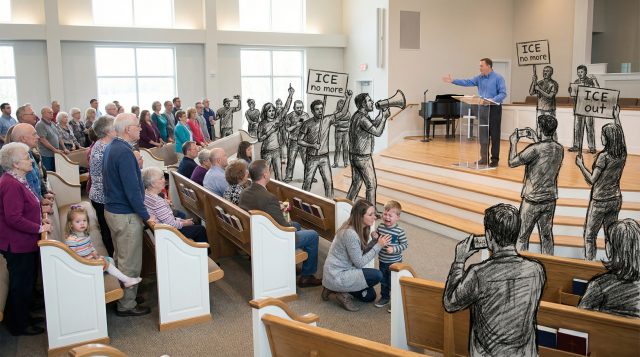
Sometimes, no matter what you have prepared for, some may have a well-executed plan and make it in. If disruption occurs inside, expect the following:
- Group movement toward aisles or front rows
- Chanting or shouting
- Cameras inches from leadership
- Attempts to provoke statements or confrontation
- Totally ignoring requests to cooperate, requests to leave, and appeals for calm
What to Do
- Do not debate from the platform, or from anywhere else. This isn’t a discussion
- Use short, calm, clear, rehearsed phrases:
- “You are trespassing.”
- “You are ordered to leave immediately.”
- Repeat without engaging accusations.
- Do not get in a tit-for-tat shouting match or try to drown out their yelling or noise makers; they’ll just get louder and escalate.
- Make a clear PA announcement if needed to establish withdrawal or lack of any of consent.
- Make no hand ‘gestures’ or ‘salutes’, if you get my drift.
- Do not react if at all possible. Stay calm and exhibit control and calm in the face of ferocious yelling if need be.
- Let the congregation know everything will be okay, and give calm direction as needed.
They will push every button they can.
Avoid insults, sarcasm, overt laughter or raised voices. Give them nothing to reflect or react to. Everything will be recorded. They want a reaction. They will push every button they can. The longer it goes without your losing control, meaning staff and the congregation, the louder the protest may get. Stick with the plan.
Don’t be surprised if people get, ‘bumped’. This could be an overt intentional ‘accident’ designed to evoke a response. Try to simply walk or turn away. This does not mean succumbing to; or in any way encouraging or permitting physical abuse. Protect your people as necessary, but do all you can to avoid it.
If the protest is only one person, or just a few and looks like it can be contained and maybe directed away or stopped, your service may be able to continue. But if the numbers of invaders is large, and the disruption substantial; be prepared to abandon the service in favor of a delayed service or a livestreamed sermon later in the day. Have this policy well understood by church staff and communicate it privately to the parishioners when they leave, without alerting the protestors. If you can’t pass this along, tell them you’ll reach out later about finishing the service, but give no details the protesters can use. Then, reach out via email and/or text, or even call, well before the service or livestream and give details and times.
Exhibit a quick, controlled response. In at least the immediate service after the incident be prepared to address the protest calmly and confidently and still deliver your message. This demonstrates strength; control; and support in the face of adversity. Get your flock back together immediately. Waiting without word invites doubt; fear and worry. Let them see you in control and undeterred. To borrow words from the oft sung spiritual and gospel hymn: “I shall not be moved”, sometimes sung as, “We shall not be moved”. Either way, get that message across quickly.
Protecting Children Without Escalation
Children are often the most affected emotionally. Always try to shield them from any effects and protect their precious innocence. They are likely to show their fear; possibly crying or cowering. Do your best to shield them and remove them from the incident.
Immediate actions should include:
- Securing children’s ministry areas. Attempts to block movement to children cannot be permitted.
- Locking internal doors where permitted. Never block or lock emergency exits.
- Freezing movement between areas where possible to staff and church members only.
- Keeping children away from doorways, windows and hallways.
- Give a calm but controlled response and words of reassurance to children.
- Be prepared for anxious parents, and as always, check identities of those retrieving them.
This is control and containment, not panic. Naturally, children should not be exposed to shouting, chaos, or confrontations if it can be avoided. Be the rock for them and their shield if it does occur.
Movement Over Confrontation
Sometimes the safest, most faithful option is not to fight for the room. As we’ve mentioned previously, a small interruption that looks like it doesn’t have the staying power to last might be dealt with and the service could continue. But larger numbers with prolonged issues and tense standoffs serve none but the protestors, so don’t be afraid to ‘call-it’ and reconvene as we’ve discussed.
Places of worship should plan in advance for:
- Relocation to secondary spaces.
- A delayed service, live or video, for later that day or as soon as possible afterwards.
- Orderly dismissal, paying special attention to those with children and anyone needing mobility assistance.
- Messaging to address the incident as soon as practically possible afterwards.
- Communicate to all for plans in case it happens again.
- Methods of communication and signals the staff can understand between themselves, even if no words can be spoken.
Your house of worship may have other considerations; added complexities that may all need to be addressed, so try and think about a lot of this beforehand. Have a plan, or at least have a dialogue recognizing potential disruptions that could result in immediate action to quell the unrest and preserve sanctity, not to mention sanity of those involved. Ending a service early is not surrender. Losing emotional control is.
Law Enforcement: Call Early, Not Late
Calling law enforcement is appropriate when trespass orders are ignored. For the great majority, churches are private property, with open, public access. On private property, you have the right to remove or have removed, someone determined to be trespassing or unwelcome for whatever reason you may reasonably have.
There was a lot of grey area and some generalized language in that last sentence, and intentionally so. This is absolutely not a, ‘one size fits all’ issue. What is lawful and permissible in one state or city may absolutely not be in another. Where it’s lawful to escort, with a hands-on approach, a person out in one state, those exact same actions could get you arrested in another. What you must do is determine what is legal with the laws of your land; doing so via consulting with your legal council and board of elders for church policy; and seek the recommendations of your local law enforcement agency.
With the unlimited possibilities during stressful occasions, and unpredictable people; it’s impossible to give a simple, blanket: Do this first; then that; or lastly the other, type of formula. I cannot stress strongly enough, consulting with others as just described so you are completely aware of the limitations of your behaviors when dealing with protestors. You are indeed guarding the faithful, but you must know your limits and take care of your interests too.
When practically possible, contact the police as soon as is necessary. Even if the person leaves before the police arrive, at least inform the responding officers about what occurred. This way they’re aware, as that person may return, or be a problem to someone else they need to be aware of and on the lookout for. Trust me, as a police officer I can tell you we all wanted to know of a potential issue so we could stop it before it started.
…your every move may well be scrutinized by masses
So the remaining question is, what can you do? As I previously said, with worthwhile risk of overemphasizing, consult with your elders for your church’s preferred policy and your lawyer, and the local law enforcement if necessary. Review state and city laws; and any that apply to your location. Then, even in the states more permissive to physical contact, using the least contact necessary is recommended only after clear direction has been given. Sadly, we live in a litigious world, and your every move may well be scrutinized by masses after someone points a phone and records you. This is our world today.
The person or people may feign not hearing your direction, or totally ignore you, but even so; give clear, easy to follow orders before anything else. I would like to give examples of what would work; but institutional, theological and personal differences and abilities beyond the legal question; are so varied, it’s practically speaking; impossible. This has to be a carefully crafted policy and response you both practice and teach to your safety team. This really is a touchy subject, in every sense. What I will do is give a partial list of examples you should not do or avoid, or that may have negative results.
- One person takes it upon themself to, ‘take care of business’. It should always be two or more people involved when possible – avoiding a solo response.
- Using angry words and shouting back at anyone shouting at you or others. Be calm despite any attempt to escalate, and ignore the insults hurled everywhere. Stay above the fray.
- Not using clear, short, polite verbal commands and requests with authority.
- Failing to first tell them they are trespassed or must leave. – Examples: “You need to leave now.” “You are trespassed from this property”.
- Narrate your actions calmly “Sir, we are escorting you out.”
- Don’t let emotions guide actions.
- Don’t show physical signs of anger. Have a neutral facial expression, appear professional. Not hands on hips like you’re ready to go and getting impatient. Look alert and attentive to them. Be calm, and polite, even in the face of the exact opposite.
- Keep contact you do use, if permitted, as slow, deliberate, visible and as minimally proportionate as possible.
- Don’t escalate. Don’t get even or punish, even with a grip you think no one sees that you know to be a little too tight.
- Avoid pain compliance holds, locks or strikes.
- No chokeholds or neck restraints.
- Don’t continue force once the person is outside and disengaging.
- Stop immediately once outside. Don’t detain or have contact longer than necessary. You are not law enforcement. There may be very rare occasions when detention is necessary after a major crime; or to prevent further injury, but for the vast majority of times; just let them leave.
- No weapons of any kind; batons, firearms, pepper spray unless specifically justified.
- Yes, some of these sound very difficult to do, or not do when anger and accusation is screaming in your face, but we have to stay above the fray and not descend to their depths. We defend against physical abuse; but we deflect verbal vitriol and let it fall flat.
Media and Recording: Control the Exposure
One of the simplest and most overlooked steps. Immediately stop the public livestream when disruption begins. Continue internal recording on security cameras. Documentation protects the church later. Do not give protesters a global broadcast platform inside your sanctuary.
There’s a good chance someone will record what they’re doing, and use that sometimes as a weapon against you if you react to them or approach them. Using phones to record you is an intimidation tactic. They may loudly and falsely claim things like, “They’re going to throw me out of this so-called church!”, or, “They’re attacking me!” Even a calm move towards them with their very shaky handheld phone video as they scream and shout can look threatening as they try to frame you as the aggressor, but don’t let that sway you. Expect to see whatever they record and pretend happened to be broadcast anywhere they can. They may frame a loss as a victory. They may mischaracterize your words and actions. They may claim ‘X, Y and Z’ happened when it did not. Some are willing to lie, cheat and steal to get their way. We must take the high road. AS I said before; weather the storm – win the war.
Journalists and Cameras
Media presence does not override private property rights, trespass laws and church authority to maintain order. The media does not have some magical, all-encompassing right to be there and film or interview. They can be trespassed as well. A sanctuary does not become a public forum because a camera is present. If they are present; they’re looking for controversy for their headlines and click-bait. In a world overly sympathetic to agitators today; they will likely not follow orders to leave, or be very resistant at least, and frame any attempt to move them on as aggressive or heavy-handed.
Don’t give them the rope from which to hang your reputation
Do not try to block their view. That makes it appear as if you have something to hide, and viewers will jump to the wrong conclusion. This could well be described by those looking to sensationalize or to make a story where there isn’t one as, “Angry church members tried to block our way and forcibly push us out of the church”, when nothing of the sort took place. They may well be trying to make the proverbial mountain out of a molehill. As long as everyone with the church is remaining calm and being professional, non-confrontational and polite; it will be obvious to the viewers that one side had their act together; and the other was wanting to create a scene. Don’t give them the rope from which to hang your reputation.
Legal Reality: Churches Are Not Public Forums
Under U.S. law, houses of worship remain private property, even when open to the public for worship. Protest rights do not include being allowed to disrupt services; block aisles or entrances; refusing to leave when ordered or seizing microphones or platforms.
Federal and state laws, including the FACE Act and numerous state statutes, recognize the right to worship without interference. Churches are not legally powerless. However, the FACE Act is a federal statute; not one pursued by local law enforcement, so see what your local laws are. Some examples of local laws that will probably apply:
Disturbing the Peace. A widely used statute everywhere I know of. It generally has verbiage such as; interrupting or disturbing lawful assemblies, including worship services, violent, tumultuous, threatening, or obstructive conduct.
Unauthorized Entry / Criminal Trespass. This applies when a person remains on church property after being told to leave. When entry is made with intent to disrupt or interfere. Very straightforward and enforceable by local LEOs.
Obstruction of Highways / Public Passages. This could be used if entrances to churches are blocked. Also, if access to worship is physically obstructed. This is often the cleanest charge when people block doors or access points.
These are the basics of what local LEOs can use. Beyond them, there are more specific violations if someone is assaulted, battered, or property is damaged or taken. That will have to be determined by the responding officer and those involved at the time.
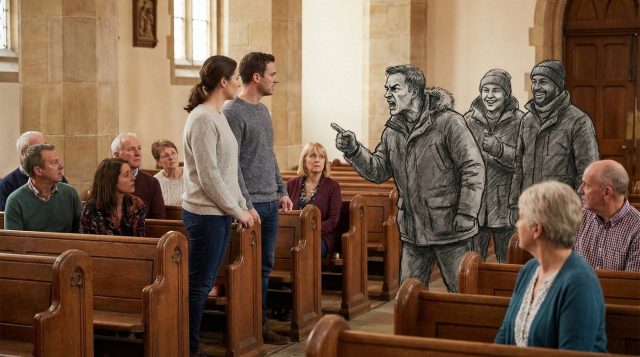
Additionally, there is always the possibility of making a citizen’s arrest, but don’t go this route unless you are very familiar with what is permissible and acceptable in your given area. As I say; what is good here may be bad and get you arrested there. Consult with church leadership, your attorney, and local law enforcement to get a complete understanding of what and when you may do something. Fully understand your rights and responsibilities; and that of the person you intend to arrest. This could well be described as a last resort; and can be escalatory in nature – meaning having a negative result; and can be a dangerous undertaking if not carefully thought out and implemented professionally.
Repeated or Anticipated Disruptions
If a church faces recurring targeting, additional steps may be appropriate.
- Written/posted no-trespass / no-demonstration notices (with legal counsel)
- Advance coordination with law enforcement
- Adjusted access control during services
- Professional security assessments
- Uniformed professionals present
Preparation protects leadership as much as it protects people. An ounce of prevention, as the saying goes, prevents a pound of cure. I’d much rather be prepared and not need it, than need it and not have it; a very familiar phrase I use in many aspects of my life.
A Simple Framework Churches Can Remember
Deter → Detect → Decide → De-escalate → Dismiss (if needed) → Document → Deter
- Deter
- Detect early warning signs
- Decide through designated authority
- De-escalate calmly and lawfully
- Dismiss or relocate if worship cannot continue safely
- Document without broadcasting
- Deter
Much of this is a review of the previous writings of this article, molded into a memorable manner, the 6-Ds. (I know, there are 7, but one repeats)
Deter. Have a plan of action ahead of time.
The wisest approach is to prepare or deter from the start. We want to head off problems or deal with them before they develop, minimizing the need for some of the other Ds. But in the event something does sneak under the radar…
Detect early warning signs.
Examples: The obvious; large groups of unknown people hovering suspiciously in the area. People carrying placards and signs; carrying noise-makers. Known agitators in your area, and the experience of other places of worship. Keep in touch with each other and share intel.
The less obvious but still suspicious; Unknown people hovering – inside or out, unknown people acting strangely – isolated and standoffish, but observant. These are just some examples, and the possibilities are many, so keep your eyes peeled.
Decide through designated authority.
If it starts; a protest or a significant interruption, there should be designated people who make the call, either as one or quickly together, on whether to deal with the situation and continue or to abandon and reconvene later. Most importantly, to make a decision that is backed up and not delayed. Not rushed, but not delayed at the same time which causes excessive doubt and confusion in the time between.
De-escalate calmly and lawfully.
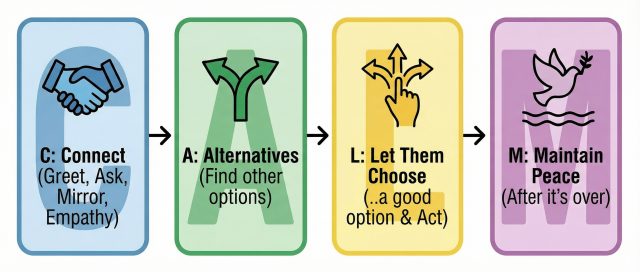
Where possible, use the C.A.L.M. method.
Connect. Greet them if but one or a few. In a large scale protest this is not practical, but we’ll continue as if it’s a small matter by comparison. Gain connection; communication between yourself and the subject/protestor. Listen to brief claims or desires; and confirm your understanding. Empathize and repeat their desires back to them to show understanding. You are NOT agreeing, just confirming you understand. You are NOT validating anything they say. Confirmation by repetition shows empathy without commitment. Failure to open any kind of two-way dialogue or meaningful communication means you may have to resort to other means; which could include removal, or summoning police assistance while keeping the flock protected. Failure to open communication, or when you are completely ignored demonstrates their refusal to cooperate and dictates your need to act, after very briefly offering an alternative, the next step.
Alternatives. Offer alternatives. Example: Can we talk about this outside? Can you talk with us after the service? Can you leave and address this with an appointment? In other words, deflect their efforts to an acceptable alternative to remove them/the disruption from the service. If they offer an acceptable alternative; even better, just so long you manage to steer the matter in the direction acceptable to you. Do not offer or ask for alternatives over, and over, and over; as this then changes your position from asking to something approaching begging. This can empower the disruptive subject to dig their heels in, and can be counterproductive if it goes on too long. What is too long? Every situation is different. You have to try and dictate the terms and not let them take control.
Let them make the decision where possible. Let them accept one of the acceptable alternatives, whether yours or one of their own that gains your approval in the moment in order to stop the interruption; then act.
Maintain the peace after they have gone. This may mean walking the person/people out and then standing guard to ensure they don’t re-enter.
Dismiss or relocate if worship cannot continue safely or satisfactorily.
We cannot permit prolonged, fruitless pleas for cooperation with an inability to move the problem away. We must avoid an incident with a large, loud group that looks like it’s going to take too much time to resolve or work itself out. If necessary, this is when your service looks like it will be interrupted so long that you need to dismiss and reconvene as previously described; maybe later that day, or online.
Document without broadcasting.
Always record such incidents. Afterwards, make a brief report with the obvious; date, time, occasion and a description of the incident, the resolution and those involved. Get statements of those directly involved. If serious enough, witnesses would be a good idea as well. Ask that people stick to facts, but if they felt fear, or threatened, or saw/heard tears etc, to include that. Keep this purely internal, and confidential. What happened may be public, but your records are private. Make copies of video and include them where possible and practical.
Deter.
Repeated here in the event you need to adjust your procedures after an incident. Is the person who created the disturbance someone known to you? Maybe a parishioner? You may need to ban them from the church. Is your safety team covert, and not in a position to guard the door? You may need to change that to stop anyone coming in. Do you have uniformed, professional security? If not, do you need to have that for a period to deter this from happening again? Make the necessary adjustments.
Conclusion
In today’s climate, houses of worship should assume that protest, when present, may range from quiet, lawful dissent outside to coordinated disruption inside. The goal is not to fear protest, but to recognize patterns, respond proportionately, and protect the most vulnerable while preserving the sanctity of worship. Because no church can write a script for every possible scenario; the advantage comes from forethought: clear policies, designated decision-makers, practiced signals, and a trained team that can act without hesitation or emotion driving the moment.
Just as important is communication. Congregations do better when they have been trained ahead of time on what to expect, what to do, and how leadership will guide them if an interruption occurs. When protesters shout, insult, or attempt to provoke, the church’s strength should look like peace; calm authority, lawful clarity, and disciplined preparation. That combination preserves order, denies agitators the reaction they seek, and allows the church to regroup quickly and continue, on its own terms. Activists would boil our blood and manipulate the masses for their purposes; but protests pass; their vitriol and violations are only in the moment. We must be ready; deflect, and protect; staying steady and sure when our buttons are pressed. Our control; our calm; our faithful dedication will overcome any temporary tumult and gather the flock as we continue together.
Sanctuary Disruption Response Cheat Sheet
- BEFORE ANY INCIDENT (PREPARE)
Designate decision-makers (not solely clergy).
Train safety team in calm verbal commands and legal limits.
Coordinate with local law enforcement in advance to determine their recommendations.
Establish children’s protection protocols.
Practice signals between pulpit, sound board, and security.
Monitor publicly available information for early warning signs.
- EARLY WARNING SIGNS
Groups arriving together during service start.
Visible signs, banners, bullhorns, or coordinated camera / phone camera use.
Unknown individuals filming entrances or asking probing questions.
Vehicles staging without attending service.
- IF PROTESTERS ENTER
Do not debate from the platform.
Use calm, short commands: ‘You are trespassing. You must leave. Let’s talk afterwards.’
Avoid emotional reaction or physical escalation.
Stop public livestream; continue internal recording.
Secure children’s areas immediately.
- DECISION POINT
Can service continue safely?
If not, dismiss calmly and reconvene later.
Communicate follow-up service details privately.
- LAW ENFORCEMENT
Call early if trespass orders are ignored.
Understand state and local laws in advance.
Use minimal contact if legally permitted.
Document incident details after resolution.
- AFTER THE INCIDENT
Address the issue quickly.
Provide calm, clear reassurance to congregation.
Make factual internal report.
Review procedures and adjust for future deterrence.